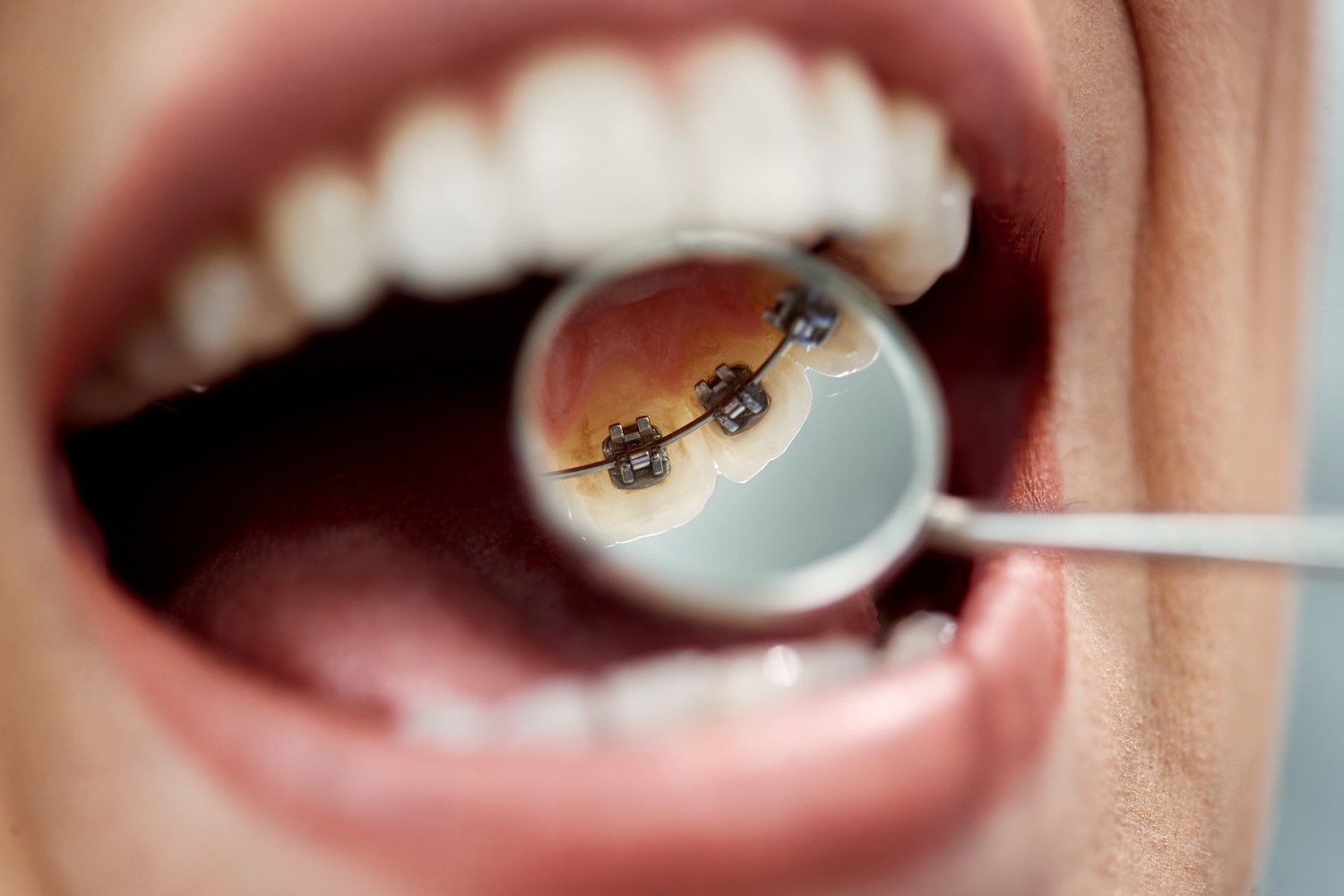

If you have a misaligned bite, you’ll find that there are more corrective options than ever. One of the lesser-known options is lingual braces, a version of traditional metal braces in which the brackets and wires are placed behind the teeth, instead of in front.
With the corrective work happening behind the scenes, patients get the effectiveness of traditional braces without the look.
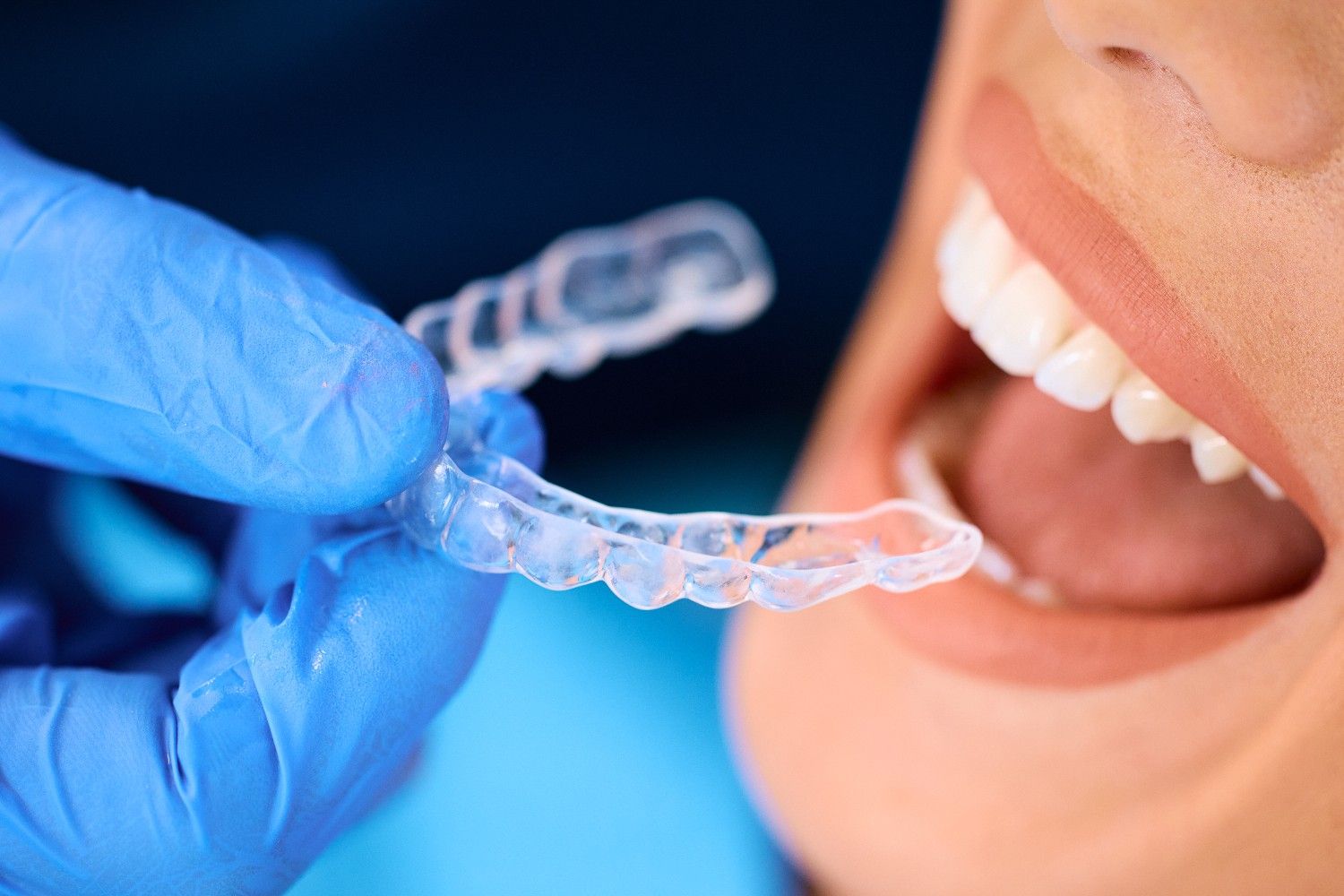
Clear aligners like Invisalign are increasingly popular for those who want to skip the aesthetics of traditional braces, but they aren’t right for everyone.
If you have severe malocclusion that falls outside the scope of Invisalign, you might find that lingual braces are a worthwhile compromise.
In studies comparing preferences for different orthodontic appliances, lingual brackets ranked among the most attractive choices for aesthetic appeal, with nearly 39% of adults in one study preferring them over some other fixed options.
As a leading Sydney orthodontist, OSW offers a range of orthodontic treatments tailored to meet your needs, including lingual braces, where appropriate.
If you’re not sure whether lingual braces are right for you, the following article will explain the benefits and drawbacks, how lingual braces stack up against clear aligners and traditional braces, and what you can expect to pay for this treatment.
What are lingual braces for?
Lingual means behind, and that’s what lingual braces are, braces that are fitted behind your teeth instead of in front, as in traditional braces.
They work the same way, just from a different position, using brackets and wires to reposition your teeth, but, importantly, they’re hidden from view.
For some, this is a preferable option, as lingual braces can still be used to treat severe malocclusion while offering the aesthetic benefits of clear aligners like Invisalign.
How do lingual braces work?
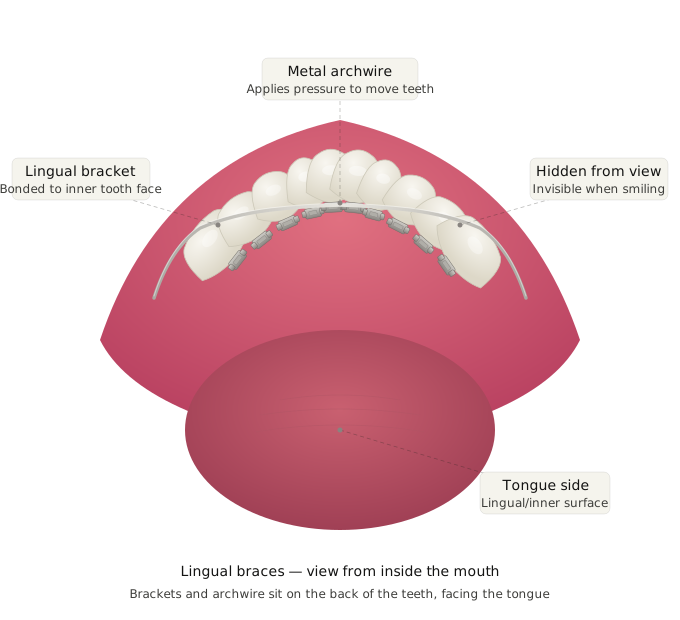
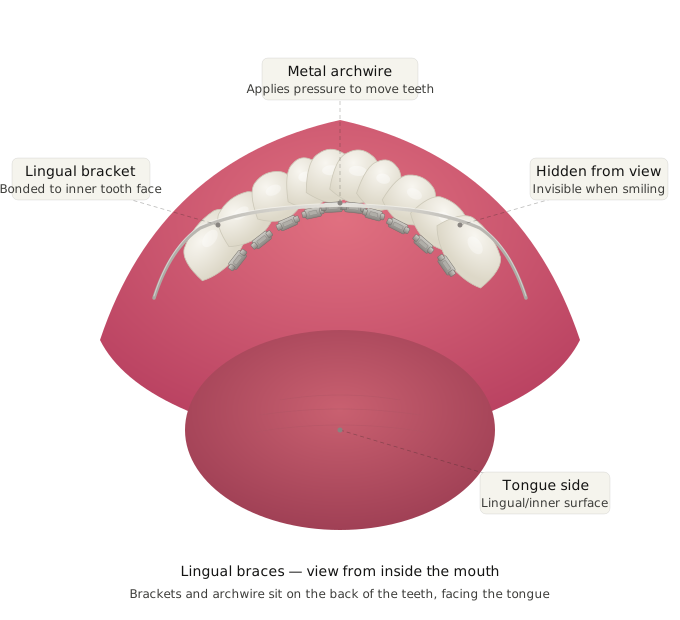
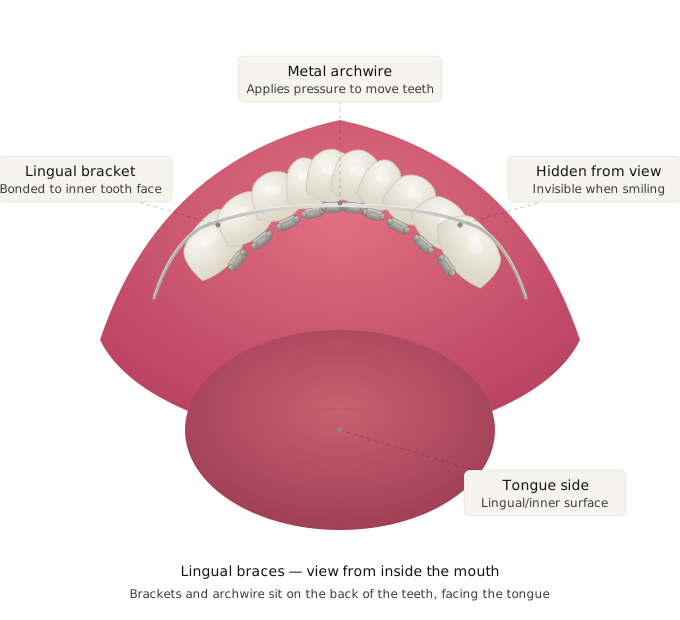
Like traditional braces, lingual braces apply consistent pressure to the teeth to move them into a more optimal position.
They are custom-made for each patient to ensure the fit is both comfortable and effective.
Your orthodontist will start by taking an impression of your teeth to create the best fit.
Then, brackets are bonded to the backside of each tooth with dental adhesive, connected using arch wires, and gradually adjusted over time to move teeth into position.
What are lingual braces best for?
So, what are lingual braces used for? In general, lingual braces treat anything that traditional braces can treat.
This might include:
- Crowded or misaligned teeth: Lingual braces are effective at correcting teeth that are crowded, overlapping or twisted, providing the same targeted tooth movement as traditional braces but from behind the teeth.
- Gaps and spacing issues: They can close spaces between teeth and help align them evenly across the dental arch where spacing problems exist.
- Bite irregularities (overbites, underbites, crossbites): Lingual braces are capable of resolving various bite alignment issues, including overbite and underbite, making them versatile for more than just cosmetic straightening.
- Tooth rotation and detailed alignment: Because lingual braces use custom‑fitted brackets and wires, they can deliver precise control for rotating teeth and refining position, sometimes in cases where clear aligners are less effective.
- Complex tooth movements that aligners may struggle with: For certain jaw and root movements or more intricate corrections, lingual braces offer stronger, continuous force similar to traditional braces, but hidden from view.
Benefits of lingual braces
Lingual braces are often overlooked as an orthodontic solution, but they shouldn’t be.
Depending on your bite issues, and your primary concerns, they can be a highly effective option.
Some of the key benefits are:
- Lingual braces can treat many of the same alignment concerns as traditional braces, including crowding, spacing, overbites, crossbites and underbites, even in more complex cases where clear aligners might fall short. Because they use brackets and wires similar to metal braces, lingual braces give your orthodontist detailed control over how each tooth moves, which can be particularly useful when exact adjustment is needed.
- For people whose jobs, social lives or self-confidence make aesthetics a priority, such as adults speaking publicly, performers or those in client‑facing roles, lingual braces let you benefit from fixed orthodontic treatment without affecting how your smile looks.
- Unlike removable aligners, lingual braces stay in place all day, so you don’t have to remember to put them back in after eating or cleaning; they’re constantly guiding your teeth toward their new positions.
Drawbacks of lingual braces
Like any orthodontic solution, lingual braces come with some trade-offs.
- Because the brackets and wires sit on the back of your teeth, they can cause tongue irritation and soreness, and some people experience a temporary lisp or speech adjustment as they get used to them.
- Lingual braces tend to be more expensive than traditional braces or clear aligners due to custom fabrication and specialised placement.
- Keeping lingual braces clean can be more challenging because it’s harder to see and reach behind the teeth, which may require extra care and effort.
- Finally, treatment can sometimes take a bit longer and involve more frequent adjustments than other options.
Lingual braces vs traditional braces vs clear aligners
| Feature | Traditional Braces | Lingual Braces | Clear Aligners |
|---|---|---|---|
| Visibility | Brackets and wires are attached to the front of teeth and are very noticeable. | Braces are bonded to the back of the teeth and are virtually invisible. | Clear plastic trays are very discreet and hard to see. |
| Effectiveness for Complex Cases | Very effective for most orthodontic issues. | Equally effective for complex cases, with precise control. | Best suited for mild to moderate alignment issues; less ideal for severe corrections. |
| Comfort | Can irritate cheeks and gums; adjustments may cause soreness. | May cause initial tongue irritation and slight speech changes. | Smooth plastic, generally more comfortable with fewer soft-tissue irritations. |
| Removability | Fixed, always working and cannot be removed. | Fixed, always working and invisible. | Removable, can be taken out for eating, drinking, and brushing. |
| Oral Hygiene | Brackets and wires can make flossing/brushing more challenging. | Slightly harder to clean due to placement behind teeth. | Easier to clean since aligners can be removed. |
| Dietary Restrictions | Yes, avoid hard or sticky foods. | Yes, similar restrictions to traditional braces. | No restrictions, aligners taken out for meals. |
| Treatment Duration | Often 18-36 months depending on case complexity. | Similar to or sometimes longer than traditional braces due to customisation and complexity. | Typically 12–24 months but depends on compliance and case severity. |
| Cost | Generally mid-range cost among orthodontic treatments. | Often higher cost due to custom fabrication and specialised placement. | Can be more expensive than traditional braces. |
| Patient Compliance | Low, always working without patient behaviour required. | Low, always in place but may require patience for adaptation. | High, must be worn ~20–22 hours per day for effective progress. |
| Suitability for Discreet Adults | Less discreet, visible brackets and wires. | Very discreet, hidden behind the teeth. | Very discreet, nearly invisible aligners. |
Are lingual braces right for you?
Lingual braces are often an excellent choice if you have severe malocclusion issues, but are hoping for a more discreet solution.
The virtually invisible nature of lingual braces makes this option particularly popular with adults who didn’t get the chance to correct their bite as adolescents.
At OSW, our skilled Sydney orthodontists are passionate about helping you achieve a winning smile, and can give you tailored advice about whether lingual braces are right for you.
With our personalised and patient-focused care, we use custom treatments and the latest technology to get the best results possible.
Contact us today to book a consultation at our Epping, Hurstville, or Parramatta locations.